
Casinos Without Traditional Slots: How Instant Games and Crash Games Form a Separate iGaming Segment in 2026
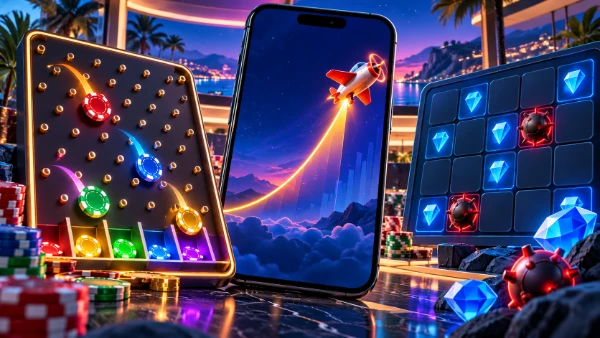
Online casino catalogues in 2026 are no longer defined solely by reel-based slots, table games and live dealer rooms. A separate group of short-form games has become increasingly visible, built around direct actions rather than spinning reels. Crash games such as Aviator, JetX and Spaceman sit alongside Mines, Plinko, HiLo and other instant formats that use simple rules, compact interfaces and clearly displayed outcomes. Suppliers do not all use exactly the same terminology: one company may describe a title as a mini game, another as an instant game, casual game or crash game. The important distinction is mechanical rather than purely commercial. These titles generally remove reels, paylines and conventional slot bonus structures and replace them with a single central action, such as cashing out before a multiplier stops, selecting safe positions on a grid or following a direct probability-based result. By 2026, this is substantial enough to be treated as a recognisable part of iGaming rather than merely an unusual variation on slots.
Why Instant and Crash Games Now Sit Outside the Traditional Slot Model
A conventional online slot normally presents its result through reels or another arrangement that performs the same basic function. Symbols land in combinations, and the game evaluates them according to paylines, ways-to-win rules, clusters or another defined pay system. Features such as free spins, expanding symbols, multipliers and bonus rounds may add further stages. Instant games take a different route. Their basic mechanic is usually visible from the first screen and can often be understood without learning a complicated paytable. Mines, for example, centres on selecting positions while avoiding hidden losing positions. HiLo asks the player to make a higher-or-lower choice. Plinko uses a falling object and a set of possible payout positions. The visual presentation varies considerably, but these games are linked by a more direct connection between the main action and the result.
The way established suppliers organise their catalogues confirms that this distinction is no longer theoretical. SPRIBE identifies Aviator as a mini game and also offers non-slot titles including Mines, HiLo, Dice, Keno 80 and several other compact formats. Evoplay places games such as Avia Rush and Plinko Blast in its Instant Games category and also identifies crash mechanics separately. Pragmatic Play maintains a dedicated Crash Games range that includes Spaceman, High Flyer and Big Bass Crash. Aggregators also increasingly distinguish Crash, Plinko, Casual, Scratch, Table and Slots when sorting supplier content. There is still no single industry-wide definition of an instant game, so the boundaries can overlap. A crash title can simultaneously be described as an instant game, mini game or arcade-style product depending on the supplier. Even so, the separation from conventional slots is now clear enough to affect catalogue structure, game development and how titles are presented to players.
The scale reached by specialist suppliers also shows why the category deserves separate attention. SPRIBE stated in company material published in 2025 that its games were reaching more than 50 million monthly active players across more than 60 countries, with Aviator remaining its flagship title. Earlier growth came partly from crypto-focused casinos, but crash games have since moved into a much wider range of regulated operations. SmartSoft offers another example: in April 2025, the company announced the regulated launch of JetX in Portugal after modifications, certification and approval from the Portuguese gambling regulator SRIJ, describing it as the first crash game approved for that market. These examples do not mean that crash games have replaced slots. They show something more specific: suppliers can now build substantial international business around non-reel mechanics rather than treating them as experimental additions to a slot catalogue.
Crash Games Replace Reels with a Live Multiplier Decision
The core crash mechanic is unusually easy to recognise. A round begins and a multiplier starts increasing from a low value. At an unpredictable point, the round ends or “crashes”. The player needs to cash out before that event to receive the value reached when the cashout is accepted. SPRIBE’s Aviator uses an increasing curve, while Pragmatic Play’s Spaceman follows the same broad principle through a character travelling while the multiplier grows. SmartSoft’s JetX uses another presentation of the format. Themes, maximum values and additional features differ, but the essential structure remains consistent: the question is not which reel symbols will appear, but how long the player remains in an active round before taking the available return or losing the stake when the crash occurs.
This cashout decision gives crash games a different feel from slots, although it should not be confused with control over the underlying random result. Waiting longer can expose the player to a higher available multiplier, but it also leaves the stake in the round for longer. Cashing out earlier locks in the lower value available at that moment. The eventual crash point is not caused by how long an individual player waits, and previous multiplier results do not establish what the next round will produce. Statistics showing recent outcomes can therefore describe history without turning random results into a predictable sequence. This is an important distinction because the visual presentation of a rising multiplier naturally creates a sense of timing and decision-making that is stronger than the interaction usually associated with pressing spin on a conventional slot.
Crash games also commonly add social elements around the basic multiplier. Aviator, for example, includes live bets, chat and statistics, while Pragmatic Play describes chat, previous-game statistics and leaderboards as features used across its crash range. Because multiple users can participate during the same round, the screen can show other bets or cashouts while the multiplier is moving. This creates a shared-session character that differs from a standard slot, where each spin is usually presented as an individual event. It does not make the probability more favourable or allow one player’s actions to determine another player’s result. Instead, the social layer changes how the game is experienced: the main random mechanism remains central, but information about other participants is displayed around it in real time.
Mobile-First Design Has Given Non-Slot Games Their Own Audience
One reason instant and crash games have expanded is that their core mechanics work naturally on small screens. They rarely need a detailed reel set, numerous symbol explanations or several layers of bonus information to make the basic round understandable. A multiplier, a grid, a series of cards or a Plinko board can occupy most of a phone display without making the essential action difficult to follow. SPRIBE specifically describes titles such as Aviator, Mines and HiLo as adaptive across desktop, tablet and mobile devices, and notes that several of its games were designed to work on lower-powered devices and limited-bandwidth connections. Those characteristics are not universal across every instant game, but they demonstrate why specialist developers have been able to address mobile-heavy markets without simply reducing a desktop slot interface to fit a smaller display.
The compact format also affects how these games can be organised inside a casino catalogue. Traditional slot sections may contain hundreds or thousands of titles differentiated by themes, reel arrangements, features, volatility profiles and jackpots. A non-slot section can instead be divided by mechanic: crash, Mines, Plinko, Dice, HiLo or other short formats. The difference matters because a person choosing between two crash games is often comparing the execution of the same broad mechanic, while a person choosing between slots may be comparing very different reel structures and feature sets. In practical terms, this gives operators a reason to maintain dedicated crash or instant categories rather than placing every RNG-based casino title in a single generic games section. It also allows specialist suppliers to build recognisable portfolios without needing hundreds of traditional slot releases.
At the same time, the boundary between established slot brands and crash games is becoming more fluid. Pragmatic Play has extended the Big Bass name from its large slot series into Big Bass Crash, keeping familiar branding while replacing reel-based play with a crash mechanic. Play’n GO has taken a similar approach with arcade-style Crashback titles such as Boat Bonanza Rider and Bucking Rider. Boat Bonanza Rider, released in May 2025, replaces conventional reels with a rising multiplier and a decision about when to cash out. This type of crossover is significant because it shows that suppliers no longer need to choose between slot development and non-slot development as completely separate businesses. Familiar themes can move between formats, while the underlying mechanics remain clearly different. For players, the name or visual theme alone is therefore no longer enough to identify how a game actually works.
Instant Games Extend the Category Beyond Crash Mechanics
Crash is the most recognisable branch of the non-slot category, but instant games cover a wider range of structures. Mines typically presents a field containing safe positions and hidden losing positions; successful selections can increase the available return until the player takes it or hits a mine. HiLo uses card values and a higher-or-lower decision. Dice games connect the result to a numerical range or target, while Plinko sends a ball or similar object through a board towards payout positions. Keno-style and scratch-style products may also appear alongside instant content, although their classification varies between suppliers and jurisdictions. What these games share is not one mathematical model but a preference for a direct central mechanic that does not depend on conventional rotating reels.
This makes “instant games” a useful commercial description but not a guarantee that every title behaves in the same way. Plinko Blast from Evoplay, released in August 2025, is categorised by the developer as an Instant Game and also tagged under Crash Games, illustrating how categories can overlap even within a single supplier’s catalogue. Avia Rush, released by the same developer in April 2025, is likewise listed as an Instant Game but uses a crash structure with a growing multiplier and a cashout decision. A Mines title, by comparison, can involve repeated choices within the same game sequence rather than one continuously rising multiplier. The individual rules therefore matter more than the category label. Two games displayed next to each other under an “instant” heading can have substantially different round structures, payout ranges and decision points.
The apparent simplicity of these formats can also hide important differences in risk. A game with only one main button is not automatically easier to assess financially than a detailed slot. Players still need to know the stake, published RTP where available, maximum payout, conditions for cashing out and what ends the round. In choice-based games, it is also important to distinguish a decision about when to accept an available payout from a decision that changes a random event itself. A cashout can determine which available value is received, but it does not mean that a future crash point can be predicted. The same applies to recent-results histories. They can show what has already happened, but past independent random outcomes should not be treated as a dependable forecast of the next one.

Regulation Is Making the Slot and Non-Slot Divide More Visible
By 2026, regulation provides some of the clearest evidence that reel slots and other online casino games cannot always be treated as one product type. Great Britain offers a concrete example. Maximum online-slot stakes introduced in 2025 are £5 per game cycle for adults aged 25 and over and £2 for adults aged 18 to 24. The Gambling Commission’s guidance defines the affected product as an online casino game that is reel-based, meaning those specific stake limits do not simply apply to every casino title with a random outcome. At the same time, separate remote game-design requirements introduced on 17 January 2025 cover non-slot casino games. These include a minimum five-second period before another game cycle can begin for casino games in scope, alongside wider restrictions such as the prohibition of autoplay and certain features that accelerate play.
Crash mechanics also demonstrate why regulators sometimes need rules written around behaviour rather than familiar visual categories. When the British Gambling Commission expanded restrictions on features that allow a customer to reduce the time until a result is shown, its guidance specifically clarified that the rule does not prohibit games in which the customer will lose the stake unless action is taken to end the game. That wording is relevant to cashout-based games because their defining interaction is precisely the decision to leave a running round before the losing event occurs. The clarification does not create a general exemption from gambling regulation for crash titles. Other technical, licensing, consumer-protection and responsible-gambling requirements can still apply. It simply shows that rules written for a spin-stop feature cannot always be transferred unchanged to a game whose core structure is based on an active cashout decision.
Portugal provides a different example of how the category develops market by market. SmartSoft announced in April 2025 that JetX had become the first crash game available in the regulated Portuguese online market following approval by SRIJ. The supplier said the process required modifications and certification before launch. That case is useful because it illustrates why a game being available internationally does not mean the same version can automatically be offered everywhere. Certification standards, permitted functionality and game classification can differ between jurisdictions. As the non-slot segment expands, developers increasingly need to adapt individual titles to national requirements rather than assuming that a single global configuration will be accepted unchanged. For casino users, the practical result is that features shown in one country may be absent or altered in another even when the game carries the same name.
What a Casino Without Traditional Slots Means in 2026
A “casino without traditional slots” should therefore be understood as a description of game selection rather than a universal legal category. It can refer to a site or dedicated casino section centred on crash, Mines, Plinko, Dice, HiLo and similar games instead of reel-based content. It can also describe a specialist collection operating alongside a much larger conventional casino catalogue. Suppliers themselves use different labels, including mini games, instant games, casual games and crash games, so there is no single naming standard that covers every title. What makes the segment coherent is the growing number of games that deliver casino wagering through short, direct mechanics without relying on conventional slot reels as the primary method of presenting results.
For players comparing these games in 2026, mechanics provide more useful information than visual style alone. The main questions are what starts and ends a round, whether there is an active cashout decision, how the payout is calculated, what RTP is stated, what maximum return applies and which responsible-gambling controls are available through the licensed operator. Local rules also matter. A feature advertised by a supplier internationally, such as autoplay, may be unavailable in a regulated jurisdiction where that functionality is prohibited. Recent-result displays, leaderboards and live-bet feeds should likewise be understood as information or social features rather than evidence that the next random outcome can be forecast. The short rules of an instant game make these checks easier to perform, but they do not remove the underlying financial risk associated with gambling.
The broader change visible in 2026 is that non-slot casino games now have their own suppliers, recognised mechanics, regulated-market launches and dedicated catalogue categories. Aviator helped establish the crash format at international scale, while JetX, Spaceman, High Flyer, Avia Rush and newer arcade-style releases show that the idea is no longer tied to one developer or one visual theme. Mines, Plinko and HiLo broaden the segment further by proving that a non-reel casino selection does not need to rely entirely on crash multipliers. Traditional slots remain one of the largest and most established forms of online casino content, but they are no longer the only model around which a substantial game library can be built. Instant and crash games now represent a distinct part of iGaming, defined less by theme than by direct interaction, compact presentation and mechanics designed outside the conventional reel structure.
Similar articles
-
Casinos Without Traditional Slot...
Online casino catalogues in 2026 are no longer defined solely by reel-based slots, …
-
 Why Can the Same Slot Have Diffe...
A slot can keep the same name, artwork and basic features yet behave …
-
 What Happens to Your Bet If the ...
A lost internet connection in the middle of a slot spin can make …
-
 Why People Choose Different Type...
People choose different types of casino games because every format offers a different …