
Why Can the Same Slot Have Different Versions at Different Casinos?
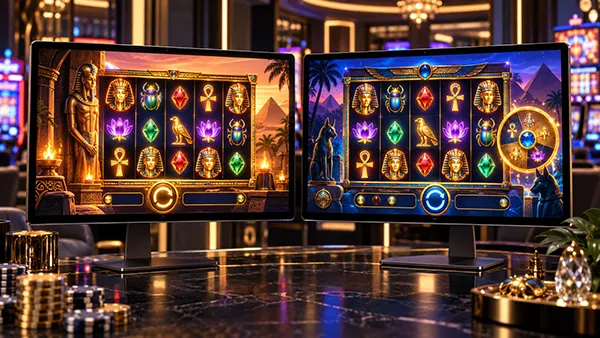
A slot can keep the same name, artwork and basic features yet behave differently from one online casino to another. This is not necessarily an error. Developers may release several approved versions of one game, while local rules and the casino’s chosen configuration can affect the version a player receives.
One Title Does Not Always Mean One Identical Game
The developer controls the core game: its reels, symbols, bonus rules, visual design and mathematical model. In some cases, however, more than one certified version is supplied under the same title. The differences may be small enough that the game looks almost identical during an ordinary session.
For readers comparing casino catalogues, nolimitway.net provides a useful example of how familiar slot titles can appear alongside several game categories. Seeing the same title elsewhere should not automatically be taken to mean that every setting behind that title is identical.
Casinos do not normally rewrite a developer’s game at will. They use versions made available through the supplier and permitted for the relevant market. This distinction matters because a lower or higher return setting can exist without changing the game’s name, theme or headline bonus feature.
RTP Is Often the Main Difference
Return to Player, or RTP, is the theoretical percentage of stakes a game is designed to return over a very large number of rounds. It is not a promise for one session. A 96% RTP does not mean that a player who stakes £100 will receive exactly £96 back.
Some slots are distributed with more than one approved RTP configuration. The visible reels and bonus round can remain familiar while the long-term mathematical return differs. The change may come from adjusted prize values, feature frequency or another part of the approved game model.
This is why the RTP shown inside the game itself matters more than a figure copied from an old review or another casino. In Great Britain, UK Gambling Commission rules require information about RTP, house edge or winning probability to be easily available before a customer commits to gamble.

Local Rules Can Change Features and Limits
A second reason for different versions is regulation. Gambling rules are not identical in every country, so suppliers may prepare market-specific builds. A feature allowed in one jurisdiction may be restricted in another, while stake limits, autoplay, bonus-buy functions or speed of play can also be affected by local requirements.
The result can be two versions with the same branding but a noticeably different experience. One may include a feature purchase, for example, while another relies on the bonus being triggered through normal spins. A casino may therefore list the familiar title even though some controls or options are absent.
Jackpot games can differ as well. A slot may be linked to a progressive prize network in one setting and offered without the same jackpot arrangement elsewhere. Regulators can require the jackpot rules, eligibility and return information to be made clear, so players should check the rules rather than relying on the title alone.
How to Check Which Version You Are Playing
The most reliable starting point is the information panel inside the slot. Check the stated RTP, paytable, maximum win, available features and betting range before playing. These details describe the version currently loaded and are more useful than assuming that a remembered figure applies everywhere.
It is also worth checking the game provider and the casino’s market version. A title with the same artwork can be supplied under different approved settings, but a legitimate operator should not invent an arbitrary RTP outside the versions provided and tested for that game.
Finally, separate theoretical RTP from short-term results. Actual returns can move far above or below the published percentage over a limited number of spins because slot outcomes are variable. The important comparison is therefore between the stated rules and RTP of each version, not the result of a single playing session.
Similar articles
-
 Casinos Without Traditional Slot...
Online casino catalogues in 2026 are no longer defined solely by reel-based slots, …
-
Why Can the Same Slot Have Diffe...
A slot can keep the same name, artwork and basic features yet behave …
-
 What Happens to Your Bet If the ...
A lost internet connection in the middle of a slot spin can make …
-
 Why People Choose Different Type...
People choose different types of casino games because every format offers a different …